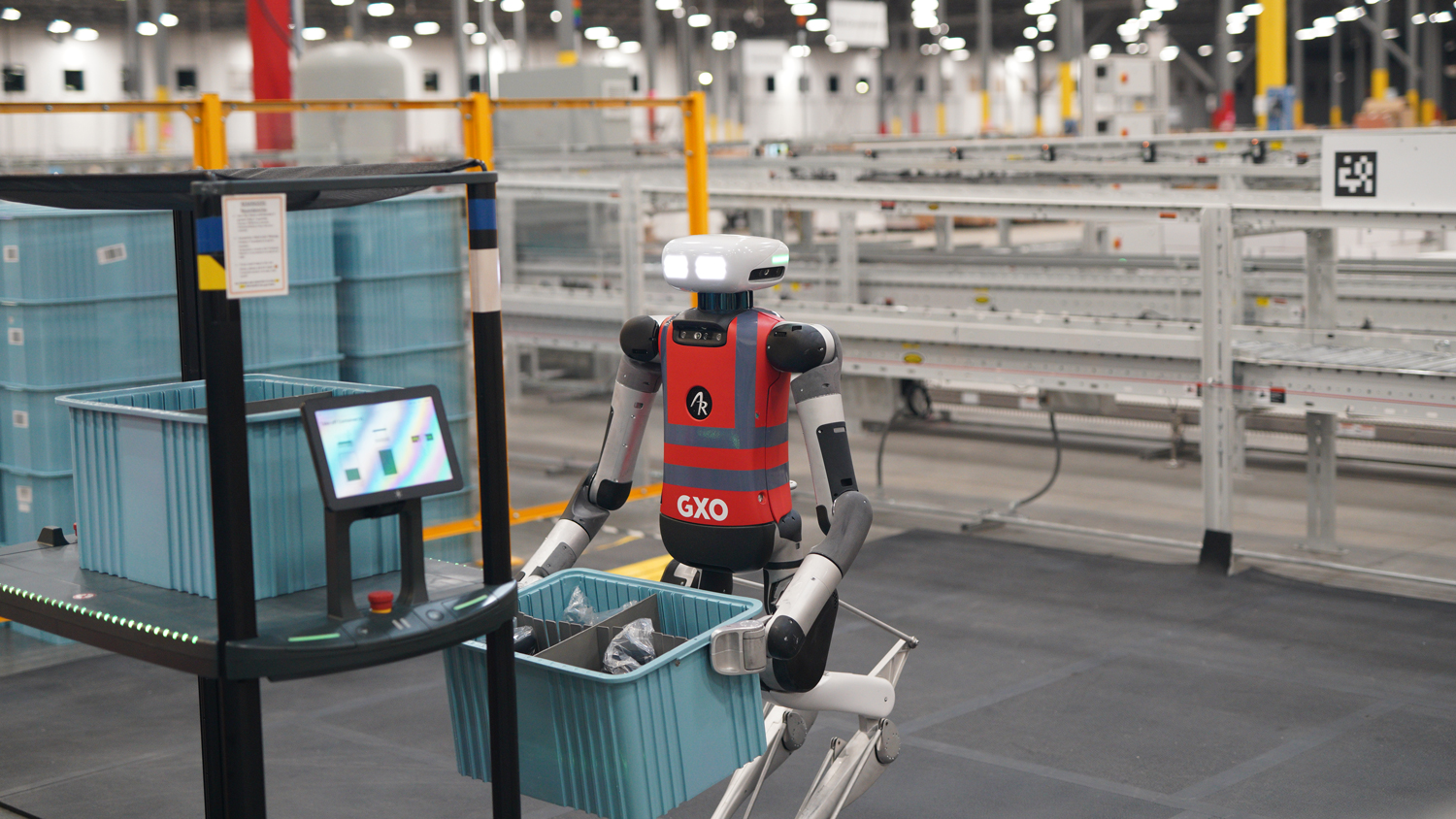
BMW’s February 2026 report on its Spartanburg humanoid pilot contains a lesson more consequential than a robot’s silhouette. The automaker said production IT, occupational safety, process management and shop-floor logistics all had to be involved early. Figure 02 entered an existing manufacturing system; the surrounding organization was part of what made its work usable. BMW humanoid deployment account, 2026
Price the interrupted day
Our analysis starts with an interruption. A machine unable to perform its task may require a technician, spare component or temporary alternative. The purchase price captures only part of that experience. Customers care about useful work and the predictability of what happens when a system needs attention or replacement.
A support organization can create competitive advantage while absorbing substantial capital. It needs diagnostic tools, trained people, replacement inventory and processes for learning from failures. The right investment depends on the operating environment and service promise, rather than simply the number of units shipped during a reporting period.
Follow responsibility after delivery
Who pays for intervention? Is maintenance bundled, charged separately or handled by a partner? Can problems be diagnosed remotely? Does an update reduce failures or introduce new ones? Answers reveal whether early deployment economics are representative or temporarily subsidized. They also clarify whether service quality can survive a much larger installed base.
The useful comparison is cost per dependable unit of work over a realistic operating period. That requires measuring the task the customer actually buys, without pretending every task is interchangeable. Robotics commercialization becomes more credible when production growth arrives with a support model that keeps machines useful, preserves trust and produces repeat orders without hidden labor. Financing the machine is only one part of financing the business.
The handoff is part of the machine
BMW described standardized interfaces to its Smart Robotics ecosystem and a deliberately chosen, highly automated body-shop environment. The account does not say that the robot was simply unpacked and left to operate. It describes integration into an established process with people already experienced in introducing new equipment. That makes the result meaningful, but also warns against assuming identical deployment effort at every customer. BMW humanoid deployment account, 2026
For a robotics supplier, these interfaces are part of the product even when they do not appear in the hardware bill of materials. Diagnostics, recovery procedures and coordination with existing automation influence the customer’s daily experience. If those functions remain bespoke engineering services, a growing installed base can consume more support capacity than a headline shipment figure suggests.
Agility sells an operating arrangement
GXO’s 2024 Digit agreement included Agility Arc, the software platform covering activities from facility mapping and workflow definition to management and troubleshooting. The arrangement paired humanoids with existing mobile robots in a live logistics process. That is a broader commercial proposition than a standalone mechanical device, because the customer is buying a way to run the task. GXO commercial agreement with Agility, June 2024
A service structure also changes incentives. The supplier may benefit from designing components that are easy to replace, faults that are easy to identify, and updates that reduce repeat visits. The customer benefits when responsibility is clear. But public descriptions of robots-as-a-service do not reveal every allocation of maintenance expense or performance risk; those depend on the actual contract.
The generation change creates a support question
Figure’s November 2025 production account said its Figure 02 robots had completed their BMW work and were retired as the company moved toward Figure 03. Its June 2026 update then showed Figure 03 sequencing work at Spartanburg. The sequence demonstrates ongoing development, while raising a practical commercial issue: customers need a transition path when hardware generations change faster than factory investment cycles. Figure 02 BMW deployment, November 2025 Figure 03 at BMW, June 2026
A newer robot can offer better capabilities and still impose migration costs. Tools, software interfaces, training material and spare parts may need updating. The important question is not whether progress should stop to protect old equipment. It is whether the supplier can make progress predictable enough for customers to build it into normal capital and maintenance planning.
A shipyard makes the same issue physical
Saronic’s acquisition of Gulf Craft added an existing shipbuilding operation to an autonomy company. Its later Marauder trials connected that industrial base to a larger autonomous vessel program. The relevance here is organizational: building and supporting a marine machine requires facilities, practical manufacturing knowledge and a service relationship extending beyond the autonomy software. Saronic Gulf Craft acquisition, April 2025 Saronic Marauder trials, May 2026
The analogy has limits. A warehouse robot and a vessel face different operating conditions and maintenance cycles. Yet both illustrate why software-style growth assumptions need adjustment for physical products. A fleet remains useful only if failures can be diagnosed, parts supplied and repairs performed where the equipment operates. A technically elegant design can become commercially fragile if that network arrives too late.
The missing denominator in deployment stories
Cumulative hours, components moved and machines shipped provide evidence of activity. They rarely disclose all the technician hours, spare inventory and integration effort behind that activity. Without the denominator, readers cannot calculate full operating economics. That is a limitation of the public record, not evidence that the products fail or that the companies are concealing a particular outcome.
The next useful disclosures would show whether support effort per installation falls as deployments accumulate, whether customers renew and expand, and how reliably machines return to work after faults. Those measures connect engineering learning to financial value. The repair organization belongs in an autonomy investment thesis because it is one of the mechanisms that turns a promising machine into a dependable customer relationship.
Sources & evidence
This archive preserves its original editorial date. Sources describe the events and announcements discussed; they do not establish today’s status.