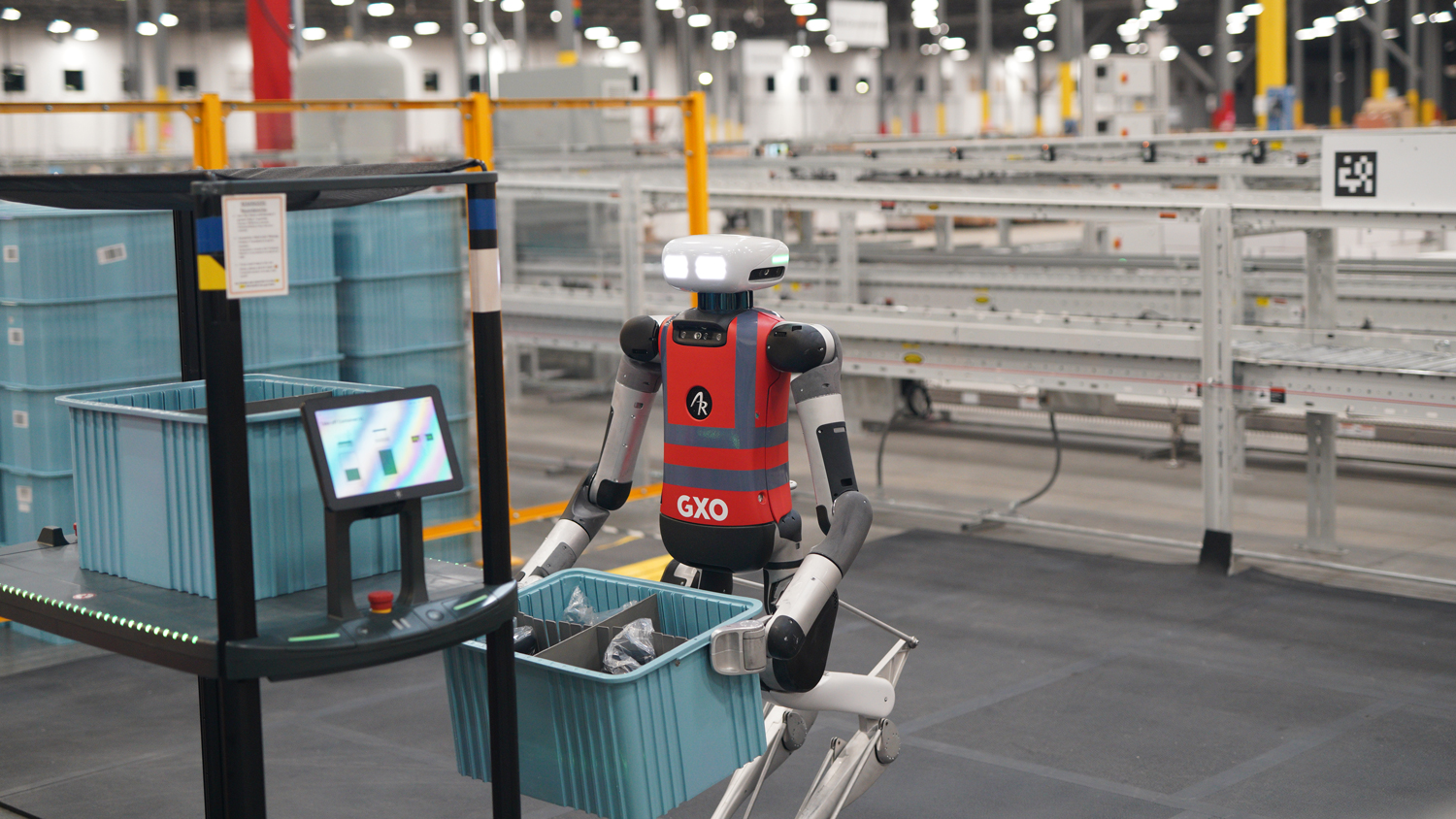
GXO’s June 27, 2024 agreement with Agility Robotics converted a late-2023 humanoid pilot into a multiyear robots-as-a-service arrangement. The first described task was unglamorous: transferring totes from mobile robots to conveyors at a SPANX logistics facility. That specificity makes the deal useful for understanding autonomy revenue. It identifies a customer, a workflow and a purchasing structure, without claiming that a humanoid can replace every warehouse role. GXO commercial agreement with Agility, June 2024
Define success before scaling
Our analysis treats a pilot as a learning arrangement. It can establish whether a system fits a task, integrates with equipment and earns operator confidence. A pilot can be commercially valuable before becoming a large purchase, but its revenue quality and support costs differ from recurring production business.
The next step is an acceptance standard. Who decides whether the trial worked? Which conditions count? What happens when the system fails? If those questions remain vague, an impressive demonstration can end without a purchasing decision. Clear criteria connect engineering progress with a customer’s authority and willingness to spend.
Track the repeat order
Investors should examine the transition burden. Does every customer need custom integration? Can operators be trained efficiently? Are maintenance and updates included? These questions determine whether revenue can grow without equally rapid expansion in specialist labor. A high-value contract may still contain substantial work that cannot be reused elsewhere.
The strongest evidence is a sequence: completed evaluation, accepted delivery, sustained use and follow-on spending. An announcement establishes the stage its wording supports; later milestones require later evidence. Reporting that stage accurately helps readers see real progress and remaining uncertainty. A development objective should not be presented as completed operational scale, and a later demonstration should be evaluated on its actual conditions and scope.
A customer contract changes the question
Agility’s later report that Digit had moved more than 100,000 totes at GXO’s Flowery Branch facility added evidence of repeated operation. Its account also described stacking totes onto another floor location. Those are vendor-reported milestones, not audited profitability figures. But they move the discussion beyond whether the machine can complete a single filmed action and toward whether the customer can incorporate it into an operating process. Agility reports 100,000 tote movements, November 2025
The economic significance lies in repetition. A demonstration establishes possibility; a sustained task provides opportunities to measure interruption, recovery and throughput. Those measures can improve both parties’ bargaining position. The supplier learns what support really costs, while the operator learns whether the robot removes a bottleneck or simply shifts work to another person. Neither conclusion can be inferred from a cumulative tote count alone.
The next generation carries a different promise
Agility introduced Digit 5 in September 2026 and reported more than $300 million of multiyear customer orders as of May, subject to contractual milestones. That qualification belongs next to the number. An order contingent on deployment or acceptance is not the same as recognized revenue, and a multiyear total is not annual sales. Investors need the schedule and conditions before converting backlog into a growth forecast. Agility Digit 5 announcement, September 2026
The distinction matters especially when a manufacturer changes generations. A customer may want the improved product but still require site validation, staff training and integration work. The commercial contract can therefore be real while the revenue remains dependent on engineering execution. A large backlog makes successful execution more valuable; it does not remove the execution risk.
BMW provides a useful counterexample
BMW’s February 2026 account describes Figure 02 as a completed pilot in Spartanburg. It separately identifies Hexagon’s AEON as the subject of its Leipzig program, with an initial test in December 2025 and further integration planned during 2026. The customer is exploring multiple suppliers and operating environments rather than announcing that one successful robot now owns its entire factory network. BMW humanoid deployment account, 2026
This is a reminder that a famous customer logo is not a unit of revenue. The relationship may cover one cell, one plant or a broader development partnership. BMW’s staged approach also shows why competing designs can coexist: a wheeled machine with interchangeable tools and a bipedal manipulator need not address exactly the same work. Commercial differentiation must survive the customer’s actual selection process.
Where the public record stops
The GXO agreement and subsequent operational milestone support a stronger commercialization claim than a laboratory video. They do not disclose the full service fee, fleet-level gross margin, intervention burden or renewal economics. Those missing facts should limit valuation claims, not erase the documented progress. Public reporting can distinguish a meaningful contract from proof of a fully mature business.
The next decisive evidence would connect deployments to recurring revenue and support expenditure over the same period. That would reveal whether each additional installation benefits from reusable software and procedures or requires another custom engineering project. For autonomy investors, conversion from pilot to purchase is a milestone; conversion from purchase to dependable, repeatable economics is the larger business.
Why this matters beyond humanoids
The same reporting discipline applies to autonomous vehicles and defense software. Development contracts, test milestones and operational orders can all create value, but they finance different stages. A clear chronology prevents a later demonstration from being mistaken for mass delivery, or an earlier pilot from obscuring a genuine commercial advance.
GXO’s public sequence is valuable precisely because its steps are visible. The measured conclusion is that a bounded warehouse application has progressed into contracted and repeated use. Whether that sequence can be reproduced across many sites remains the test that converts an encouraging company story into a scalable industry.
Sources & evidence
This archive preserves its original editorial date. Sources describe the events and announcements discussed; they do not establish today’s status.