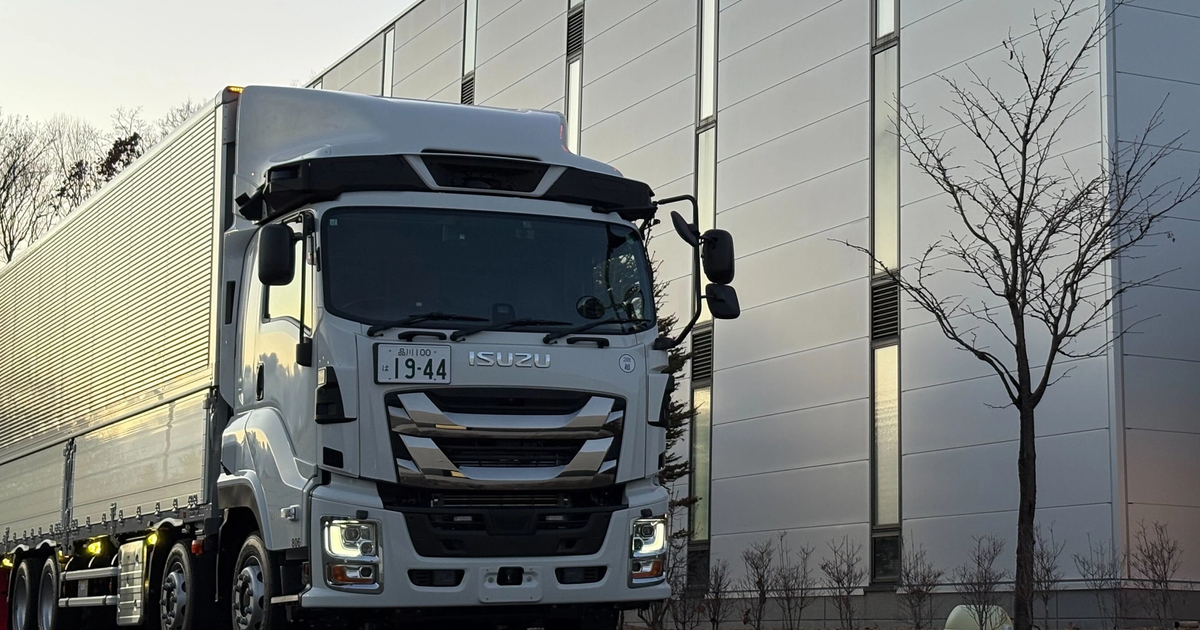
Applied Intuition and Isuzu described a new phase of autonomous-truck deployment on a 450-kilometer Japanese logistics route in March 2026. Their announcement also stated that earlier public-road operation had used a safety driver. That qualification is essential to reading the investment case for autonomy tools: progress in testing and integration is real without being equivalent to unrestricted driverless operation. Applied Intuition Isuzu second-generation trucks, March 2026
Sell a better decision
A tool provider may sell to several competing developers without choosing which vehicle or robot ultimately wins. Our analysis adds a condition: the tool must remain useful as customers change models, hardware and operating environments. Breadth alone does not make a product indispensable or guarantee attractive margins.
The strongest customer argument is an observable reduction in costly uncertainty. A simulation workflow might find a failure earlier or compare a proposed update more consistently. Its value should connect to a decision the customer needs to make, rather than an impressive volume of synthetic activity generated during testing.
Look for repeatable deployment
Investors should examine integration costs. If adoption takes a large services team, early revenue may overstate repeatability. Conversely, deep integration can be valuable when a tool becomes trusted in release decisions. The distinction is whether each new deployment becomes easier and more economical without weakening its usefulness to the customer.
The diligence question is not simply how many autonomy companies exist. It is which recurring engineering problem the supplier solves, how customers measure the benefit and what happens when budgets tighten. A useful tool earns its place through better decisions. That is a more durable thesis than assuming every business adjacent to autonomy will participate equally in its growth or retain the same share of customer spending.
A tool earns its place through a development decision
The capital behind Applied Intuition also has a specific transaction history. Its June 2025 announcement described a combined $600 million Series F and tender offer. That establishes financing and liquidity activity; it does not isolate simulation revenue or disclose the profitability of the Isuzu program.
Simulation is valuable when it helps a team decide whether a change is ready, why a failure occurred or which design should be tested next. Generating more synthetic miles is not itself the commercial outcome. The customer needs confidence that the scenarios reveal relevant weaknesses and that results can be related to the physical system.
The Isuzu relationship gives this discussion a concrete customer setting. A truck developer must connect software development with vehicles, a route and logistics operations. Tools that shorten that connection can have recurring value. But the source announcement does not disclose the full economics of the relationship or prove that every tool in the supplier’s portfolio contributed equally to the milestone.
The safety driver is part of the evidence
A supervised road deployment can reveal problems that a laboratory test misses while limiting the consequences of failure. It should be described on those terms. Removing the driver is a further operational and assurance question, not merely a change in marketing language. The evidence needed for each stage may differ substantially.
An investor evaluating a tool vendor should therefore ask which stage the product supports and how customers know it is working. A tool used to explore designs may have different requirements from one used in release approval. Both can be useful businesses, but their pricing, liability exposure and integration depth are not automatically the same.
Owning simulation creates an integration thesis
Shield AI’s June 2026 completion of the Aechelon acquisition provides another model: bringing simulation capability into the same corporate group as autonomy software. The ownership event is established; the benefit is still an engineering and customer-execution question. It should be evaluated through the work customers can perform, rather than through acquisition scale alone. Shield AI acquisition completion, June 2026
The comparison does not imply that owning a simulator is necessary for every autonomy company. A specialist can also create value by working across multiple vendors. The strategic choice concerns coordination, independence and customer trust. An integrated suite may reduce friction, while a cross-platform tool may appeal to buyers who want to compare competing approaches.
Synthetic evidence needs a connection to reality
A simulation can be detailed and still miss a relevant property of the real environment. The issue is not whether synthetic testing is useful, but how its limits are found and handled. Teams need a process that uses field observations to improve scenarios and then checks whether the revised model predicts behavior more accurately.
Commercially, this creates a service opportunity and a scaling challenge. Expert support may be needed to configure a credible environment. The vendor becomes more valuable if lessons can be reused across customers without exposing confidential information. If every engagement requires a completely new model and team, the revenue may scale more like consulting than software.
The durable market is recurring uncertainty
Autonomy systems change over time: sensors, code, models, vehicles and operating conditions all evolve. That creates a continuing need to compare versions and identify regressions. A tool supplier can earn recurring revenue if it becomes a trusted part of those decisions and remains compatible with customers’ changing systems.
The strongest proof is therefore repeat adoption within a development organization, not simply a long customer-logo list. Does the tool save engineering time, find relevant failures or make release decisions more consistent? Can the customer explain the benefit? Those questions connect simulation’s technical role to a defensible capital thesis and prevent the picks-and-shovels label from becoming a substitute for business evidence.
Sources & evidence
This archive preserves its original editorial date. Sources describe the events and announcements discussed; they do not establish today’s status.