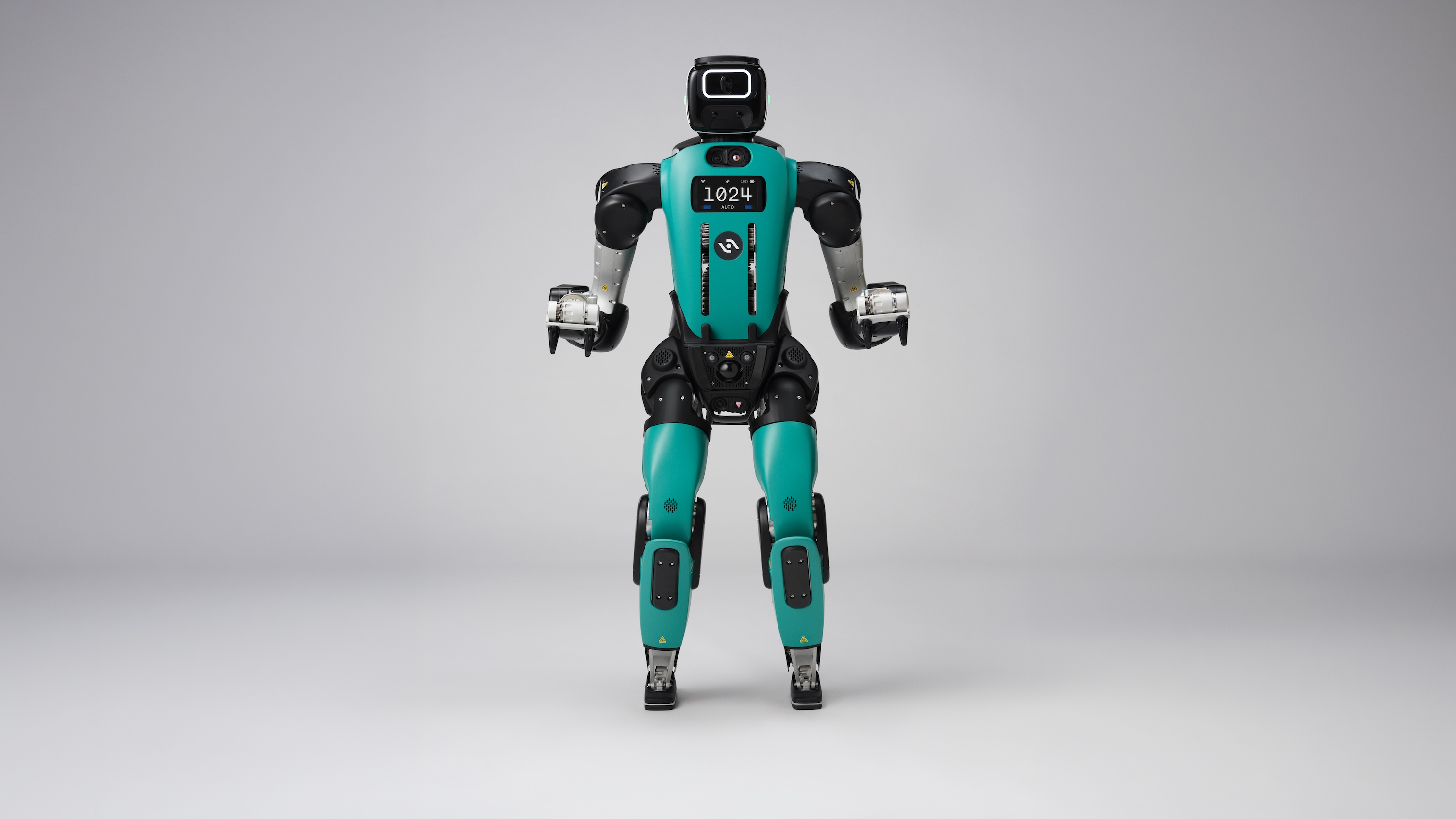
Figure’s June 2026 return to BMW with Figure 03 put a new generation of hardware into a different factory workflow. Three months later, its Nscale agreement committed billions to future compute. The sequence shows why humanoid capital has to finance learning, production and customer operations together, while keeping the evidence for each separate. Figure 03 at BMW, June 2026 Figure and Nscale agreement, September 2026
Separate learning from production
Our analysis divides a humanoid company into three connected businesses. The first learns to perform tasks. The second manufactures reliable machines. The third delivers useful work inside customer operations. Progress in one does not settle the economics of the other two, even when all share one brand and financing round.
A prototype can demonstrate a promising capability without establishing repeatability across many units. A factory can produce machines before enough customers have suitable tasks. A deployment can attract attention while relying on expensive support. These are questions to investigate, not conclusions about any particular company or its announced products.
Measure useful hours
Financing should match these uncertainties. Research needs milestones for capability and generalization. Manufacturing needs evidence about yield, reliability and repair. Commercial spending needs customers who keep paying after trials. Counting robots built without counting useful hours delivered can leave the central business question unanswered, even as production numbers rise.
A practical scorecard would follow task success, intervention frequency, maintenance burden and retention alongside production. It should explain how those measures vary by task. Humanoids may serve many environments, but a credible business can begin with a narrow one. Capital is most informative when its intended use reveals which uncertainty management is trying to resolve next and what evidence would count as success.
The factory result needs the right unit
In November 2025, Figure reported that its earlier Figure 02 deployment at BMW had loaded more than 90,000 parts and accumulated over 1,250 hours of runtime. Those are company-reported operating measures tied to a defined sheet-metal task. They are more informative than a video clip, but they are not a complete account of profitability or performance across unrelated jobs. Figure 02 BMW deployment, November 2025
The difference matters when a robot company raises at a large valuation. A specific production task can establish useful capability without proving that the same machine will work economically throughout a factory or home. The next task may require different perception, manipulation and safety arrangements. Capital must cover that transition rather than assuming demonstrated competence transfers without additional work.
A new generation resets some questions
Figure 03’s BMW announcement described a sequencing demonstration rather than simply continuing the previous sheet-metal-loading job. New hardware can incorporate lessons from the old system while creating new validation work. A buyer needs to know which capabilities carry forward and which have only been shown in a narrower demonstration.
That is why a cumulative count from an older generation should not be used uncritically as evidence about the newer one. A company may be making genuine progress, but the operating history belongs to a particular configuration and task. An investor’s scorecard should retain that connection instead of merging every successful event into one undifferentiated claim of readiness.
Compute is becoming a major capital commitment
Figure’s Nscale announcement put the start of the planned GPU deployment in the second half of 2027. That future date creates a sequencing issue: model-development plans, hardware production and customer demand must remain compatible while the infrastructure is being delivered. The initial compute commitment is not proof that all of that capacity is already available. Figure and Nscale agreement, September 2026
The business consequence is that a robotics company can carry both manufacturing and computing obligations. Spending more on training may improve capability, but it does not automatically shorten assembly time, reduce maintenance or create customers. Management has to decide which constraint is most important at each stage and avoid financing all three parts of the business as though they mature at the same speed.
Customer orders are another distinct milestone
Agility’s September 2026 Digit 5 announcement disclosed more than $300 million of multi-year customer orders as of May, subject to contractual milestones. The qualification is important: it provides evidence of commercial interest without making the whole amount recognized revenue or cash received. It also gives a concrete reason to follow acceptance conditions and delivery progress. Agility Digit 5 announcement, September 2026
Comparisons between humanoid companies should preserve these differences. One may report task throughput, another conditional orders and another compute commitments. Each metric has value, but they cannot be ranked on a single scale. The reader needs to understand whether the disclosure reduces uncertainty about capability, demand, manufacturing or financing.
The investment case is a sequence, not a single leap
A practical funding plan connects successive proof points: a robot performs a task, the task repeats under normal conditions, a customer accepts the service, and the supplier can deliver another installation without restarting the engineering effort. Improvements in one stage can help the others, but none should be assumed complete merely because a round closed.
The strongest humanoid coverage therefore follows named deployments and product generations over time. It asks which lessons changed the design, what customers now buy and which costs remain unresolved. The large financing numbers matter because they support that sequence. They become persuasive evidence of a business only when the sequence produces repeatable useful work at a cost customers will continue paying.
Sources & evidence
This archive preserves its original editorial date. Sources describe the events and announcements discussed; they do not establish today’s status.