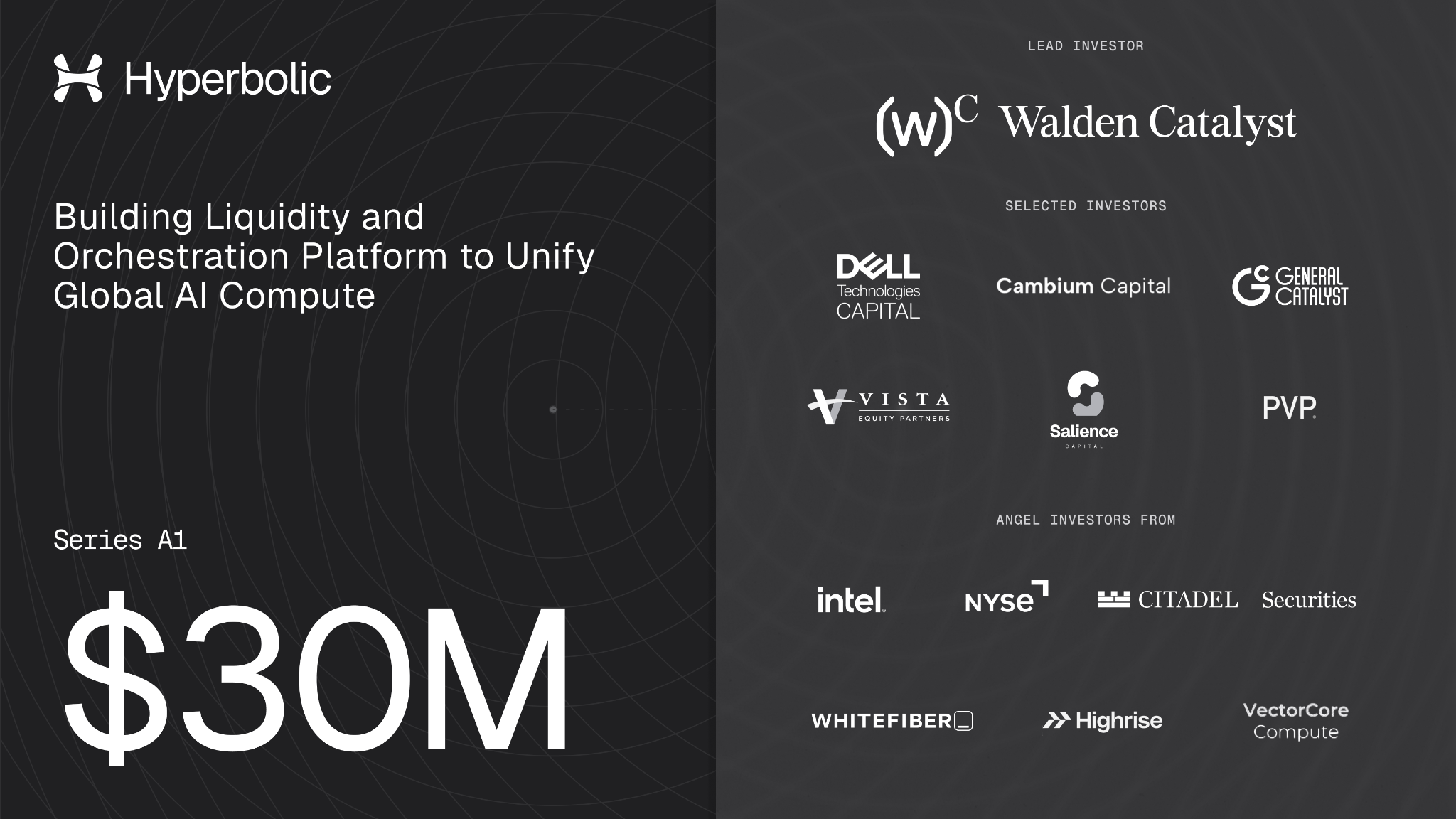
Expanding the supply of AI compute means making existing capacity easier to use as well as building new clusters. Hyperbolic announced a $30 million Series A1 on October 27, led by Walden Catalyst, to expand its orchestration software and develop a Global Compute Grid.
Current impact
The current product foundation is Forge, a control plane for managing heterogeneous GPU infrastructure. The funding gives the company resources to extend that software and related services. A financing announcement does not establish that providers have become interchangeable or that a liquid resale market already exists.
Potential greater impact
If validated capacity can be provisioned across providers with consistent operations, customers could reduce procurement friction and providers could put idle resources to work. But a GPU-hour is useful only when networking, data access, reliability and software support fit the workload. Price alone cannot settle those differences.
What would establish progress
The next evidence is repeatable movement of real workloads, utilization after operating costs and customers returning beyond an initial trial. Hyperbolic’s proposed marketplace could broaden access to capacity; its success depends on operational consistency and enough buyers and sellers, rather than the size of this round alone.
Image: Hyperbolic / official announcement. Used for source-attributed editorial reporting; rights remain with the owner.
Sources & evidence
Sources describe the announcements and evidence available when this analysis was published. Company claims are attributed; plans and trials are not treated as sustained operation.