Hardware companies often raise money between two very different kinds of proof: showing that a physical principle works and showing that a complete system can perform a mission. Investors in modular spacecraft face that distinction particularly sharply because the next experiment may require a launch.
Rendezvous Robotics announced a $20 million seed round on October 28, led by MaC Venture Capital and Toyota Ventures. The company calls it its first priced round and says the money supports spacecraft development, flight demonstrations and hiring. It does not disclose a valuation or runway.
Two demonstrations with different meanings
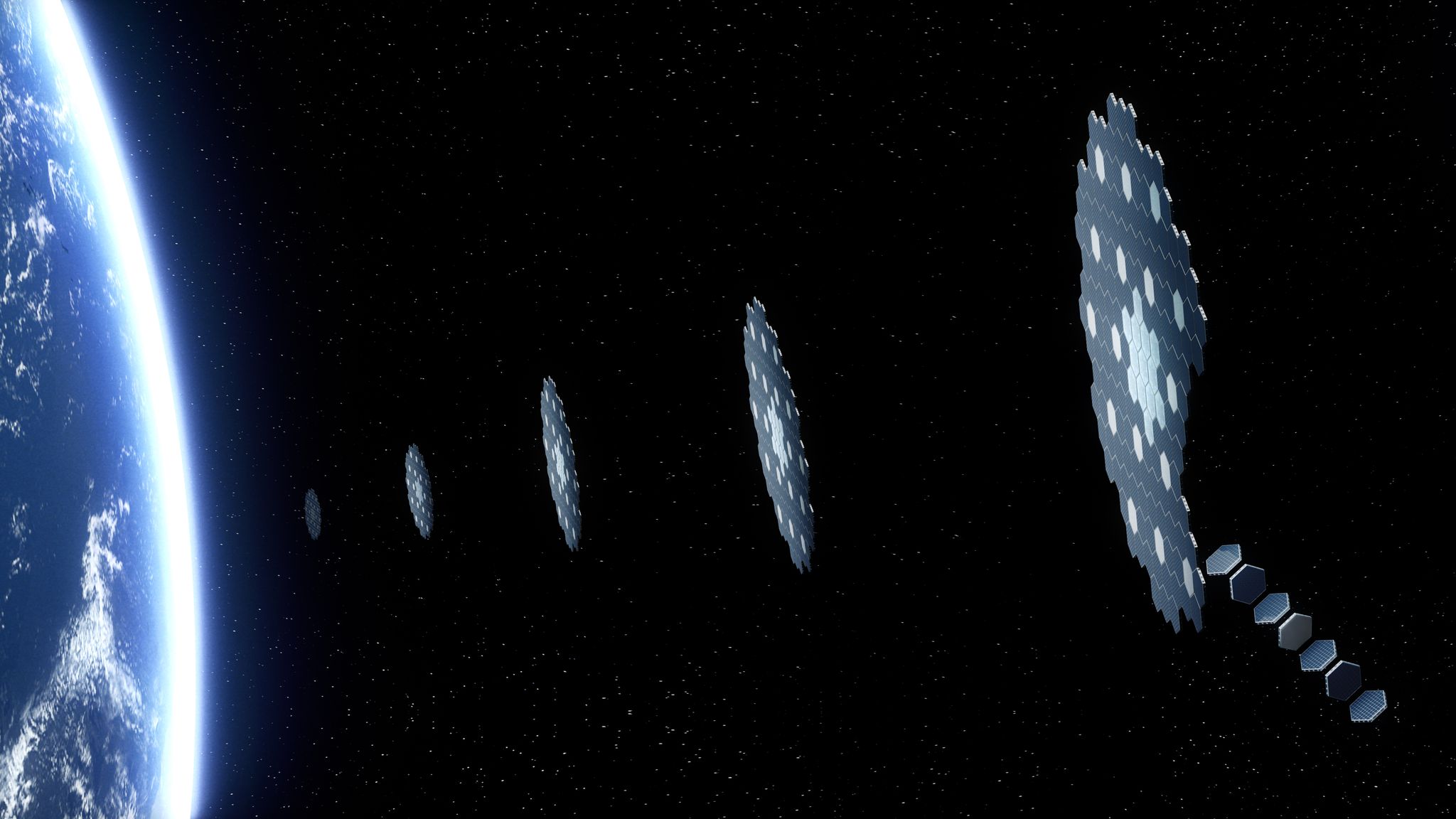
The company plans a seven-tile free-flying assembly and reconfiguration demonstration no earlier than April 2028. It separately describes a 32-tile TESSERAE experiment scheduled for the International Space Station in December 2026. Earlier TESSERAE microgravity experiments are a research foundation; they do not establish the performance of the larger independently operating spacecraft now under development.
For a financing assessment, the distinction changes the milestone map. A controlled experiment can reduce uncertainty about interaction and assembly without resolving navigation, mission operations or the reliability of a commercial architecture. Those risks need their own evidence rather than being bundled into a single claim of flight heritage.
Capital buys a sequence of decisions
The near-term value of the round is the ability to advance toward tests that narrow those uncertainties. An investor would still need the schedule, contingency and spending assumptions to judge how far the proceeds can carry the program. None of those undisclosed figures can be inferred from the round size.
If reconfigurable systems eventually deliver useful capabilities at an acceptable lifecycle cost, modularity could change how missions add capacity after launch. That remains a conditional business argument. The next evidence to watch is whether the planned demonstrations produce measurable assembly, separation and reassembly results, followed by a customer requirement that makes the additional complexity worth paying for.
Sources & evidence
Sources describe the announcements and evidence available when this analysis was published. Company claims are attributed; plans and trials are not treated as sustained operation.